Picture the sound… #MUS654
One of the elusive topics in music learning and teaching is expression and meaning. How can we work in one medium (sound) and have to explain it in another (words?)? Often the intention of the teacher and the experience of the student can be so far apart, and we may never know it. This week I got creative and a bit silly and set my class loose with the project of picturing the sound. Really – I gave them all sorts of dried pulses, pasta, rice, seeds, nuts, bits of cotton wool, cake decorations, big sheets of paper and asked them to create the picture they heard as people performed to them. This sort of invitation is usually met with two different reactions, often in close succession, excitement followed by a tentativeness and doubt.
Oh WoW!
and then…
but I don’t know what to do?
Yes, that’s good to say. When teaching music in private lessons, you will ask your students to create, to express, and there will be a first time when they too don’t know what to do. It is good to feel that and to be aware of experiencing it and of how you deal with it. If the environment (including the teacher) is conducive to learning, experimentation, and acceptance, then you have a chance to go for it. I wonder how often we challenge and allow ourselves to move beyond the familiar words we know to express in a different way? Everything from speaking through images, to sounding with colours, to feeling. What would the tactile representation of the music be? I have worked with students who have limited or no sight and it is a constant challenge to work to understand how someone else experiences something, so you can communicate clearly and effectively for them. The same is true of other languages, other instruments, other cultures. It is a challenge to become aware of how people receive communication – in words, art, or sound.
Our ‘art’ experiment illustrated that perfectly. Here are a couple of examples of the breadth of response that happened when the same people listened to some music….and yes, you can try this as well at home. I encourage you, whether you have loads of glue and pasta bits, lego, or a pen or crayon and paper, or even put some words to paper, to see what you come up with. In this first example people listened to me play the Prelude from Bach 6. We didn’t record the live playing. So you can get an idea of the music, here is a fantastic recording of Brannon Cho playing the same music:
This is what two different people came up with:
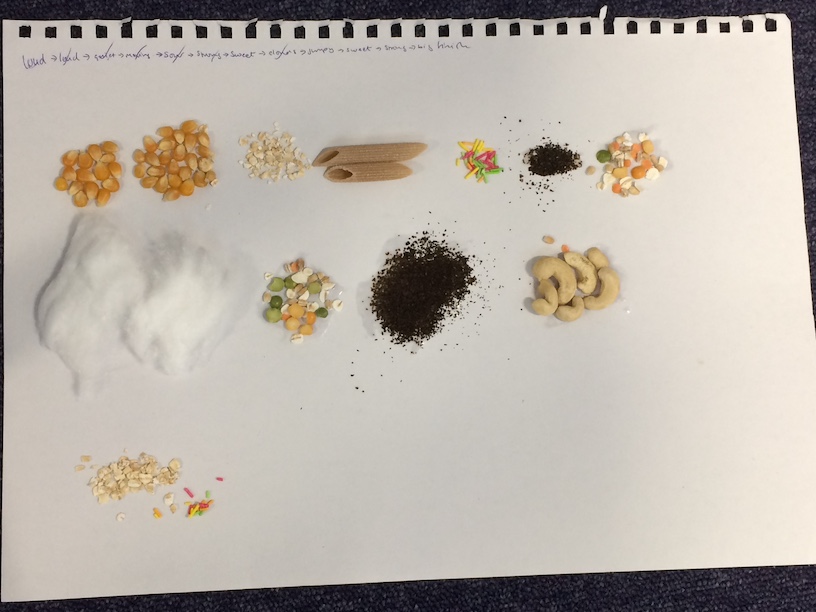
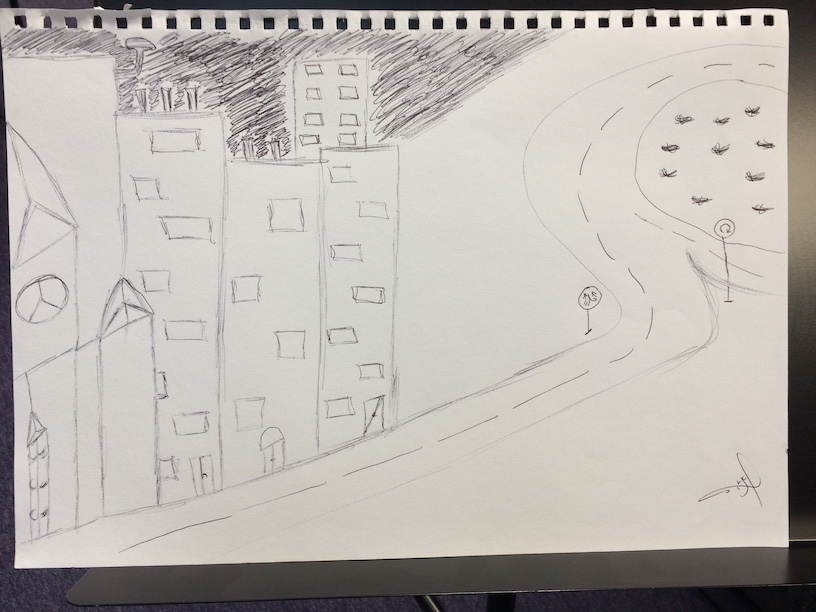
The one on the left was explained as having buildings, with a church in the forefront, and then there was a road, and a roundabout with flowers in the centre. The black is just black, and something you see, but doesn’t imply any foreboding, just black as opposed to something else.
The creation on the right, was not an image at all, but that person heard and saw process instead of a scene. It created a really interesting discussion around how we hear music and what connects with us. The process of analysis and sections and architecture spoke to that person and she said she just doesn’t think in ‘visual’ terms.
One more example… this time some Jazz. All the things that you are. Here is a version of the tune so you can listen and see what you come up with:

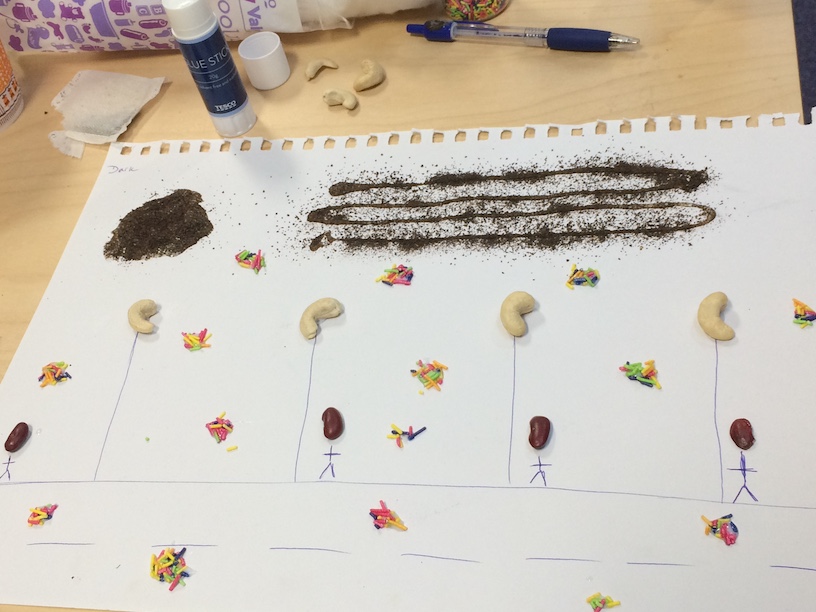
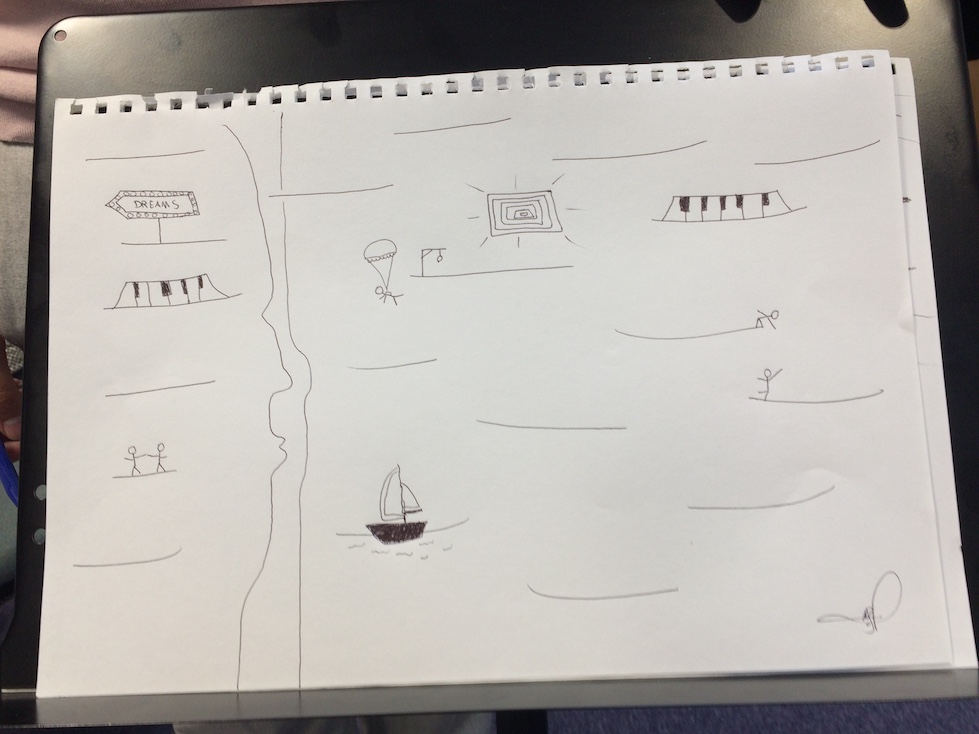
Again, all three of these were created listening to the same music. Bizarrely there are similarities. The top one has the moon in the top left corner with some darkness spreading down, and the blobby thing on the right is the outline of a person’s face and they are irrepressibly singing. (I can call it blobby because I made that one!) The multicoloured background is the terra firma foundation behind all the sounds.
The picture above also has light in it and people. This time it was a street with the moon, street lights, and people without faces.
The pen and paper one on the left had a sparse nature, with bits, but still the person embedded into the picture, and people somehow escaping from something and perhaps moving on to dreams.
Oh my! What a lot of creativity and what a realisation that music could connect and kindle so much in people. It makes the pursuit of expression and of communication all the more important. I was really grateful that my students were willing to push the boundaries and have a go. If you’d like to join us, have a listen and post your ideas – in pictures, words, or even a sound response, tagging it#MUS654 It is always a pleasure to connect and further understand where music can take us.


